Water or Movement? Foundation Warning Signs in Toledo Homes
Almost every foundation sign in a Toledo house points one of two ways: water getting in, or the structure moving. Knowing which comes first saves money, because the fixes are different. Each answer below starts with the usual cause.
Damp floors, white crust and musty air usually mean water; horizontal cracks, leaning walls and sloping floors usually mean movement. On Toledo's wet clay the two often travel together, so a specialist should check both. HomeGuide's 2025 guide treats walls leaning 2 inches or more as needing heavier bracing.
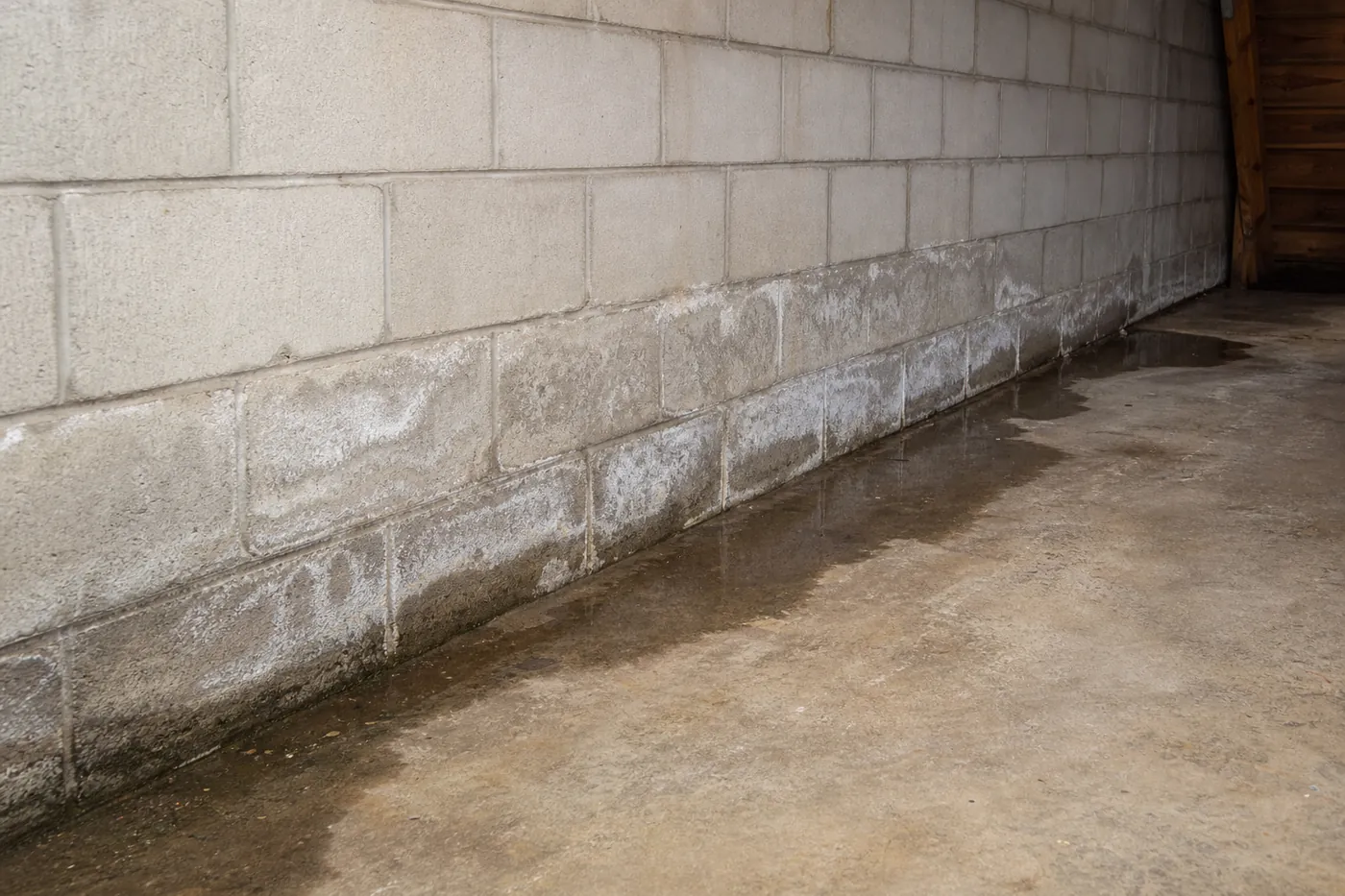
Water: a wet band where the floor meets the wall. What causes it?
Groundwater pressing in at the cove joint, the seam between floor and wall. It shows up after long wet spells and in spring when the water table is high. It is a drainage problem, not usually a structural one. See basement waterproofing.
Water: white, chalky crust on block or brick. Is it damage?
It is efflorescence, salts left behind as water moves through masonry and dries. It brushes off and is harmless itself, but it shows water is passing through the wall. In old brick and block, years of it go with crumbling mortar.
Water: musty smell but no puddles. Is that the foundation?
Often it is damp air and damp walls rather than leaks. Clay soils that stay wet keep basement walls cool and moist. A dehumidifier and better grading may be enough; if dampness patches spread, look for seepage at cracks and joints.
Water: the floor drain backs up in heavy rain. Foundation problem?
Usually not. Water rising from a floor drain points to the sewer line or the city system, not the walls. Call a plumber to check the lateral before paying for waterproofing.
Movement: a horizontal crack along a block wall. How serious?
Treat it as structural. A sideways crack partway up a block wall usually means wet, swelling clay is pushing in. Have it checked soon if the wall leans, blocks have shifted, or the crack has opened since you first saw it. See bowing basement walls.
Movement: stair-step cracks near a corner. Is the house settling?
Often yes. Cracks stepping through mortar, wider at the top, mean that corner has dropped. Mark the ends and width and check again in a few months. See settling foundations.
Movement: doors stick and floors slope. Foundation or framing?
Either. Sloping toward an outside wall suggests the foundation under it; sloping toward the middle of the house often means the center beam or its posts. Check the basement under the worst room for a leaning post or cracked floor around a post base.
Both: water through a crack that keeps widening. What now?
Fix the movement before sealing the crack. Injecting a crack that is still opening only buys time. A specialist should brace or support the wall first and then seal and drain it.
Describe the basement problem
Water on the floor after a soaking rain, a block wall bulging in, a corner of an old house dropping: a sentence or two is enough. One independent foundation and waterproofing specialist who works in Toledo reads it.